Tuesday, April 27, 2010

Jungle (Part 3), Baños, Coast.

Here is a little photo journey to get us up to date:

Bugs:


Here is a Leaf Bug. It is actually a mantis so it has those cool front arms that look like they are praying for a mate to come along and get his head chopped off.


This was the most gnarly bug we saw. It is called and Amblipgid and it looks like a spider but it is actually more closely related to a scorpion. It is HUGE. The six small legs and pinchers make it easily as big as a softball while the long front legs are probably about 10" long each. Also, this thing doesn't crawl, it moves really quick. When I was taking this picture it jumped at me to scare me back. Evidently they don't really bother people at all, actually they hunt things like cockroaches which makes them good in my book.

Here is a some barney we found in the jungle. It's a pretty agressive environtment out there. I think I got about a 6th degree sunburn on my legs from rafting. I had a milky way quantity of mosquito bites and ultimately left the jungle with what looked like a big bite on my arm that ended up swelling up my fore-arm to look like Popeye. I went to the doctor to check it out and he said it was cutaneous Anthrax! Dang.

After the jungle we headed to Baños for a few days of biking and hiking in the mountains and bathing in the thermal baths at night. After Baños we took a 10 hour overnight bus to Canoa on the coast. The bus ride was lame but the coast is awesome.


Thursday, April 22, 2010

The Jungle (Part 2)

Not bad for a front yard...

After a week of working at the main Jatun Sacha station, Kurt and I volunteered to trek over to the other side of the reserve where we stayed in the Cabaña Arajuno. This cabaña was built in 2007 in order to have a place for Guardebosques (forest guards) to live so that they may more effectively patrol and maintain the area. The other side of the reserve is bordered by the Rio Arajuno and there are several indigenous Quichua communities nearby. Before the cabaña was built, there was a large problem with people from these communities coming in and cutting down trees in the reserve to sell for money. Now, the Guardebosques walk through the forest daily in order to monitor any cutting that may occur and maintain the trails. They also talk to people in the communities, explaining the Jatun Sacha reserve and why it is important that it exists. Since at least one of the Guardebosques speaks Quichua and they are respected in the local communities, this has been largely effective (though as more and more forest is cleared around the reserve, it is under ever-increaing pressure).

Anyway, volunteers from Jatun Sacha often accompany the Guardebosques for week long stays at Arajuno. It sounded like a great opportunity to see another part of the reserve and learn about the forest, so early Monday morning we met up with the two Guardebosques, Don Gabriel and Gato. We packed up our bags with the food and clothes we´d need for the week and set off deep into the jungle. It took us about 4 hours to reach the other side of the reserve, including a couple of rests near tranquil streams that were thankfully somewhat cooler. Finally, we reached the cabaña, a two story structure in a clearing surrounded by a garden with some bananas, aji, pineapples, tabacco, yucca, and a watermelon-like plant which I think was called Bateda. The second story of the cabaña had bunk beds for around 12 people. On the first floor was the kitchen and a hammock area. There was an outhouse and the shower was either the river or a hose. No electricity- dinners by candlelight every night! But, the cabaña had everything you need for a very simple, tranquil existence.

For the rest of Monday, we relaxed- reading books, playing Uno, and enjoying the delicious food that Gato cooked for us. And the next day, Tuesday, it rained hard all day long, so we didn´t get a chance to walk through the forest. We more than made up for this on Wednesday and Thursday however. On Wednesday morning we left the cabaña around 830. We brought lunch with us- an egg and vegetable scramble with rice wrapped up in banana leaves and secured with palm fibers. We walked through the forest in the morning. I should mention that these forest walks were a great learning experience. Both of the Guardebosques have an immense knowledge of the jungle. Don Gabriel in particular knows just about everything about medicinal plants. He´s an impressive person- in his sixties, he would lead our hikes with a machete in one hand and a stick in the other to knock spider webs out of the way (and Gato would head up the rear, machete-ing anything that Gabriel missed). Gabriel would point out plants that had important medicinal or cultural uses. When he´d come across an orchid or bromeliad that had fallen from it´s treetop home, he would stop and gently place it on another tree so that it could grow once again- I found this very touching.

As the day went on we wound up visiting some of the neighboring communities. Kurt and I mostly stood around while Gabriel and Gato talked to them- the mix of Spanish and Quichua was nearly impossible to follow. Still I could tell that this was probably the most important aspect of the job. After a well-timed canoe ride, we ate our delicious lunch and started to loop around back home. But, before we did, we decided to stop at a store to buy something for dinner- a live chicken. Actually we bought the chicken and then sat around chatting with people at the store for around 45 minutes, all the while I was watching our dinner peck at the dirt and fend off bigger chickens. Then we carried the chicken through the jungle for the two hours it took us to get home. This task fell to Gato, who expertly wrapped it up in a palm leaf.

When we reached the cabin, Gabriel killed the chicken with one quick chop of the machete. We watched as Gato plucked it, cleaned it, and broke it down into edible and not-so-edible parts (there were very few of the latter). Gato made a delicious chicken noodle soup and everything went into it- feet, neck, and all. I have to say that the chicken had a very chicken-y flavor (due to it´s varied diet of jungle insects). We called this whole experience ¨proyecto chicken¨.

After more than 6 hours of jungle hiking on Wednesday, we did it all again on Thursday. Before we knew it, it was Friday and we hiked back to the main Jatun Sacha station. The whole week felt really worthwhile to both of us- not only for the education about the jungle ecology and the conservation issues facing this area of the world, but also for the warm hospitality of the Guardebosques, who were really wonderful, wise people.


On Friday night, we headed to the Laboratorio, which is pretty much the coolest bar I´ve ever been to. It´s just up the road from Jatun Sacha, and the volunteers are usually its only customers. It´s a giant thatched-roof hut with a disco ball that sells the local beer, Pilsener, by the case. On Saturday we headed back into Tena with some friends for a day of canyoning (climbing up waterfalls), hiking, and swimming in the rivers. We went with the same tour company that we rafted with the weekend before, and they were really excellent. River People Rafting- if you are ever in the neighborhood. Here are some pictures from the day...


So that´s it for today. Stay tuned for The Jungle Part 3- Food, Insects, and Anthrax!!

The Jungle (part 1)

Who wants to hear about the jungle? Well, after two weeks of limited internet access we now have the chance to tell you about it so here we go whether you like it or not.


On Monday April 5th we took the morning bus from Quito to the South East to a city called Tena. It was a winding ride through the mountains and down quite a bit in elevation. It took us from the Andes to the Amazon basin. Tena is a small town at the intersection of several rivers, the largest of which is the Napo and it feeds into the Amazon river. From Tena we took a bus about an hour to the east along the Napo to our volunteer site, the biological reserve called Jatun Sacha. When we got there we saw that we were definitely IN the jungle. Jatun Sacha was founded in 1985 and now has 2,200 hectares of preserved and protected rainforest. The volunteer quarters are set up on a small piece of this land where they have a kitchen and dining room, a few hamocks strung up and several cabañas sitting out in jungle. The rooms are basic, two single beds in each, mosquito nets included, chicken wire on the windows and one electric light. Really just a place to crash, down time mostly centers around the coveted hammocks or the dining room. The shared bathroom is a great place to find bugs and geckos at night, only cold water showers but its not bad considering the jungle is a pretty warm place. Included in our stay are three meals a day in the cafeteria.


On Tuesday we woke up for breakfast which is served daily between 6;30 and 7;00 and then we set out to one of Jatun Sacha's projects which is a botanical garden where there is a showcase of medicinal plants, a small organic garden etc. This first week we did some weeding in the garden, machete-ing, harvesting Yucca and harvesting Cacao both of which are excellent. Yucca is a tuber like a potato but a bit less starchy. Cacao is the origin of chocolate of course which makes it great right from the start but as if that weren't enough, the fruit itself is sweet and delicious despite tasting nothing like chocolate. The best part is you can pop the cacao fruit in your mouth, suck off the sweet outer part and then spit the seed in the bucket to be processed for chocolate, double the enjoyment! You can sell the cacao seeds in town for about $1 a pound. We tried roasting the seeds ourselves to make choolate and I'd say we had a near success. Here are some pics.


Driving the Yucca


Cacao makes Jungle Em Happy

Weekends at Jatun Sacha are free time so along with our new volunteer friends Cathy and Monica from Australia we decided to go white water rafting. Tena has become somewhat of a hot spot for rafting due to the abundance of rivers in the area. The previous week there had been a lot of rain which resulted in major flooding. There was a lot of property damage in Tena and other small communities but from what we heard there were few or no casualties. So, when we set out on the Jatun Yachu river it was much higher and much faster than normal. In fact, when we set out in the morning it was still raining, but as the day went on it just got nicer and nicer until it became so clear and sunny that we gave the tops of our legs enough UV radiation to last a lifetime. Today, two weeks after the fact, I still look like a lizard. Regardless, it was an awesome day. On one rapid we even lost everybody out of the raft except for Emily and the guide after nearly flipping over. How did Emily stay in? Easy, she came flying across the raft and was going to fall out but Kurt broke her fall and went overboard instead.

Saturday, April 10, 2010

Jungle

Hey everyone.

We are in the Jungle outside a town called Tena. We got here last Monday the 5th and we have been at the biological reserve Jatun Sacha since then. There is not much access to internet near where we are staying which is why we are behind on the blog. However we are taking pictures and amassing stories and we will get them all down once we have time. We went white water rafting today and it was awesome. We are planning on staying here for about two more weeks at which time we will take off for Baños. There are so many bugs here!

Monday, March 29, 2010

The food blog- Quito

It´s the blog post you´ve been waiting for! (and by you, I mean Andrea)

So what´s the food like? Let´s start with the staples- corn and potatoes. That´s really what it´s all about here. The upside is that there´s a lot you can do with corn and potatoes. Other staples are platanos (bananas and plantains), yuca, rice, pork, chicken, and of course the meat Ecuador is most famous for, cuy (guinea pig). Note: I haven´t tried cuy, but Kurtis has, and he described it as ¨different, yet also not that different¨.

Fruits are also big here, mainly in jugo (juice) form. Highlights that we don´t have in the US are naranjilla, maracuya (passion fruit), guanabana (soursop), taxo, granadilla, and tomate de arbol.


Lunch seems to be the big deal here. Most typical restuarants offer almuerzos, or set lunches, that will set you back $1.50- $4.00. They usually include juice, soup, a main dish, and something sweet.

Some typical dishes here are:
Caldo de Pollo (chicken soup)
Caldo de Pata (calf´s foot soup)
Sopa de Quinoa (Yum!)
Seco de Chivo/Pollo (rice with goat/chicken)
Fritada (to be explained below)
Locro (cheese and potato soup with avocado- also yum)
llapingacho (fried potato and cheese patties- obviously yum)
empanadas
hornado (a whole roast pig- I saw this in the market, crazy!)

Our school offers a cooking class, and we attended one where we made fritada. It consists, first and foremost, of fried pork. I think you could say it is deep fried pork. Then you take some cooked potatoes, mix them with some cheese and achiote (a vegetable used to dye food red), form them into tortillas, and fry those. Then you take some ripe plaintains and fry those, too. This is all served with mote, which is white corn that´s cooked until it bursts, similar to hominy. (Our class also made a salad, but I´m pretty sure that was just for appearances sake)
Fritada

Aji
Most of the food here is not spicy, but every meal is served with aji. Aji is a salsa made with the aji pepper (a pepper that grows here in the andes) and the tomate de arbol fruit. Tomate de arbol (or tree tomato) tastes nothing like a tomato, apparently. It is a not-too-sweet fruit that you can eat raw, cooked, or in juice form (I´ve only had it in aji form).

Snacks! They have a great snack here- ceviche de chocho. Chocho is a legume that we don´t have in the US, and it´s delicious. This is served with deep fried corn kernels. If you go for the full on ceviche, it is mixed with tomato sauce, lime, red onions, and if you´re lucky, some homemade potato chips. Because the majority of it is chocho, it´s actually pretty healthy.

Another snack is cafe con humitas or quimbolito- ground corn steamed in a leaf wrapper, tamale-style, but sweet. Then they have yogurt and pan de yuca- your choice of exotic fruit-flavored, liquidy yogurt served with little pieces of bread made from yuca.

Also, popcorn is often served with soup- just throw it on in there!

Since this week is Holy Week, we got to try a Quiteño specialty- Fanesca. Fanesca is a crazy fish soup that is only made once a year. It contains, well, basically everything. It is made with twelve types of grains (to represent the twelve apostles) including a few types of beans, lentils, peas, chocho etc., and also fish, milk, potatoes, pumpkin. Then it is topped with queso, an empanada, bolitos (little fried balls of dough), fried banana, onion, and parsley. Fish is, thankfully, the only meat due to the fact that it is eaten during Lent. Ecuadorian families traditionally prepare this together, and Ecuadorian families are large, so it is made in batches meant to serve over 100 people. We helped to prepare it at our school and made 150 servings!

And finally- drinks. A traditional Ecuadorian drink is canelazo. It´s a hot alcoholic drink made with fruit juice (the place we went had either mora (blackberry) or naranjilla) and aguardiente (alcohol made from sugar cane). Really, really delicious. Other than that, they have two types of beer and one of them, Pilsener, is not half bad.

And that´s it for the food in Quito! The next report will be on Jungle food- stay tuned.

Almuerzo- Jugo, Sopa, Plato, Postre!

Quilotoa

Hola,

Here we are in week three of our journey and all is well. We just started our last week of school which has been by all acounts an excellent experience. We have both improved our Spanish speaking skills but we have also had access to cultural, political and local information through our respective teachers that otherwise might have passed us right by. Here is a picture of us with our teachers; Luis and Alexandra on one of the museum tours they have taken us on. No idea who that kid on the right is... I guess he just really wanted to be in the picture, he didn't even make a goofy face or anything. Go figure.

After a long week of class we have been inclined to take advantage of the very central location of Quito by going on weekend excurions. Last weekend, as you can read in our previous blog post, we went to the cloud forrest of Mindo where we rode a zip line, went down a waterslide into a river and saw a whole mess of butterflies. This past weekend we decided to go to Quilotoa.

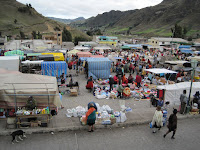
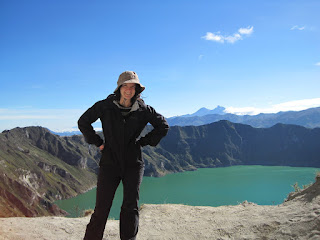
Quilotoa is a lake inside the crater of a volcano located in the mountains at about 13,000 feet. To get there we rode two separate buses and a pick-up truck; the first bus went from Quito due south to Latacunga on the Panamericana Highway for two hours. Then in Latacunga we caught a bus that went way up in the mountains for two and a half hours to the small indigenous populated town of Zumbajua. We stayed the night in Zumbahua so that we could check out the Saturday market in the morning which was a pretty crazy happenning but also your one stop shopping for fruits, veggies, meats, baby pigs, lamas, or sheep. You could get your pants sewed up and have a snack of fried potatoes and hot-dogs while you're waiting! By 1:00 we had tracked down the pick-up and we were on our way up the road to Quilotoa.

The drive took 30 minutes through beautiful highland farms, flocks of sheep and their indigenous shepherds who were mostly children. We put our stuff down at the Cabañas Quilotoa and went to check out the crater. This place was incredible. At 13,000 feet we could see into the far distance and we were above many of the clouds while the rest passed closely over our heads so closely that we could watch them break apart and pass by with incredible speed and grace even though the air was relatively calm. The lake itself is huge and the crater even more so. Here are some pictures of the crater itself and the peaks nearby.

Big Crater, Lil' Em

At the bottom


More Crater

Standoff with a chicken on the edge of the crater!

Awesome sunset between the clouds


On Sunday we hiked down into the crater until we got to the lake at the bottom. It took an hour to get down and two and a half to get back up. The trail was steep and composed of loose rock and silt plus it is harder to breathe so high up but the views were awesome and we made it out of the crater before the volcano erupted and in time to catch the bus back to Quito. We will miss Quilotoa.

Wednesday, March 24, 2010

More Pictures!

Here´s some pictures from our travels thus far. Don´t miss the new post below this one!


Another heated game of Uno (on the rooftop terrace of our hostel)
The cloud forest in Mindo

Butterfly Sex!

On the streets of Quito, old town

La Virgen de Quito